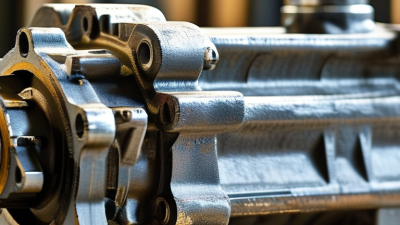
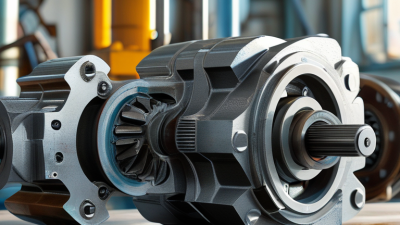
China has really become a go-to place for sourcing industrial hydraulic equipment and fluid transfer parts. In this guide, I’ll introduce you to ten standout Chinese suppliers of Cast Iron Arc Gear Pumps that international buyers often check out.
Now, we aren’t just talking about fancy-looking catalogs here. We focus on what truly matters — like the manufacturer's experience, how well they trace their materials, their machining capacity, how the pumps perform under pressure, and their quality control processes. A trustworthy supplier should be able to clearly explain details such as gear geometry, sealing options, flow ranges, operating temperatures, and compatible fluids. Things like factory audits, sample testing, and inspection reports are also super important — they often reveal what product pages don’t really show.
When it comes to real-world applications, you’ve gotta match the right pump to the job. For example, a pump on a construction machine might need to handle dust, vibrations, and sudden loads. On the flip side, agricultural equipment might require a steady flow over long periods. Before pulling the trigger on an order, it’s smart to compare details like cast iron grade, shaft hardness, port sizes, and what kind of warranty support is offered. And don’t forget about communication — slow or unclear tech support after you order can end up costing you big time once the system is up and running.
Of course, no supplier rating is set in stone. Manufacturing capabilities, certifications, and export options can change over time. Some vendors might do great on standard applications but need more vetting when it comes to more demanding systems. So, think of this guide as a helpful starting point—not a one-stop shop. Make sure to verify current specs, compliance certificates, lead times, and after-sales support directly with each supplier. Those small details really do add up, and a careful comparison can save you from leaks, early wear and tear, unexpected downtime, or shelling out extra for replacements. Get it right, and that’s a big step towards smooth, trouble-free operation.
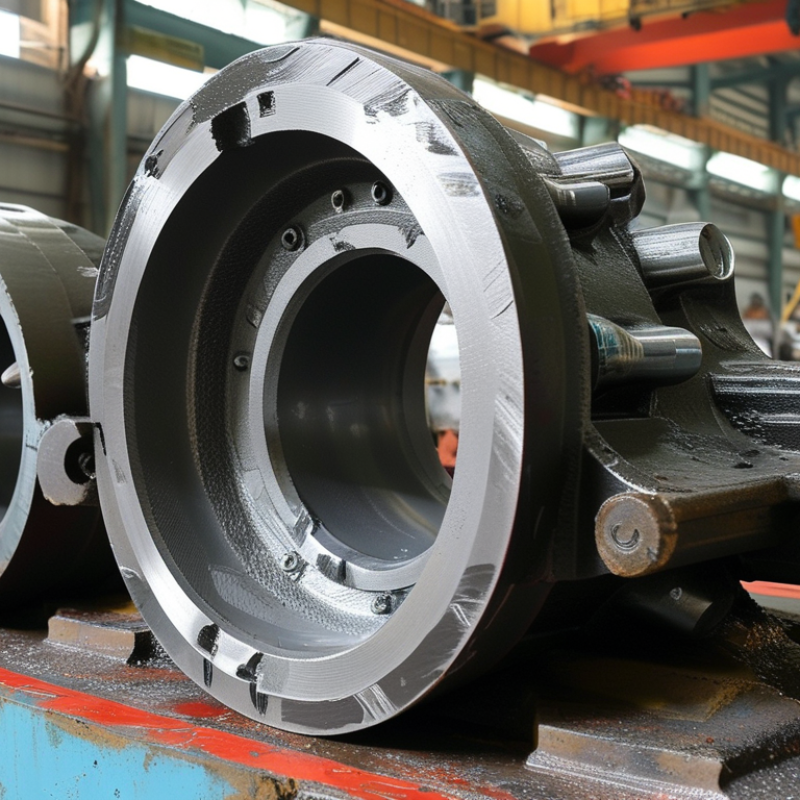
Cast Iron Arc Gear Pumps: Design, Function, and Industrial Uses
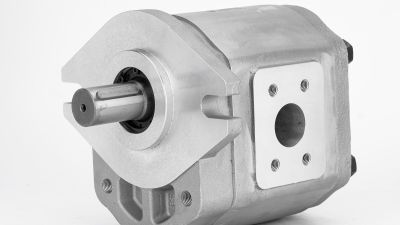
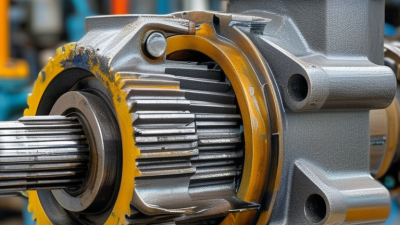
A Circular Arc Gear Pump uses two closely matched gears with curved tooth profiles. Their smooth arc-shaped engagement reduces sudden pressure changes during rotation. Cast iron housings provide stiffness, heat tolerance, and practical cost control in demanding equipment. The pump draws fluid into the inlet chamber, traps it between gear teeth and casing, then carries it toward the outlet. Internal clearance controls efficiency. Too much clearance causes leakage, while too little can create friction.
These pumps handle lubricating oil, hydraulic fluids, fuel oils, and other clean, moderately viscous liquids. Common applications include machine tools, lubrication systems, hydraulic power units, compressors, and transfer skids. In a workshop, a properly sized unit can maintain steady flow beside a warm gearbox for long operating periods. The flow is not perfectly pulse-free, though. Speed, viscosity, and discharge pressure all affect actual performance.
Cast iron suits many industrial environments, but it is not a universal material. Moisture, abrasive particles, or chemically aggressive fluids may shorten service life. Filtration matters. Alignment matters more than many operators expect. During supplier evaluation, buyers should review pressure ratings, dimensional tolerances, shaft sealing, test records, and spare-part availability. A small flaw matters. Field experience also shows that oversized pumps can waste energy and increase heating. Careful selection remains essential, especially when comparing manufacturers and technical suppliers in China.
How China’s Top Ten Arc Gear Pump Suppliers Are Evaluated
China’s top ten cast iron arc gear pump suppliers should be evaluated through evidence, not catalog language. The U.S. Department of Energy reports that pumping systems can consume 25% to 50% of industrial facility electricity. This makes efficiency testing commercially important. Each supplier should provide flow, pressure, speed, torque, and temperature records. These figures should follow ISO 4409 testing principles.
Performance deserves 30% of the evaluation. A supplier offering a High Efficiency Arc Gear Pump should show volumetric and mechanical efficiency at several operating points. ISO 4409 also supports checking displacement accuracy and leakage behavior. Material traceability should receive 20%. Inspectors should match cast iron heat numbers with chemical certificates and hardness results. Small details matter. A rough bore can increase noise and accelerate seal wear.
Production consistency may receive another 20%, based on sampling from recent batches. The remaining score can cover delivery reliability, technical support, warranty data, and spare-part availability. The 2024 Global Industrial Pumps Market outlook from Fortune Business Insights identifies energy efficiency and lifecycle cost as major purchasing factors. Still, a scoring model is never perfect. Laboratory results may not reflect dusty workshops, cold starts, or irregular maintenance. Suppliers should therefore disclose test limits, failure rates, and rejected-unit ratios. Claims without records deserve little weight.
Supplier Profiles: China’s Leading Cast Iron Arc Gear Pump Manufacturers
China’s leading cast iron arc gear pump manufacturers often serve mining, hydraulic, lubrication, and industrial transfer applications. Their profiles differ by foundry control, machining depth, and export experience. Some produce castings in-house, while others rely on qualified regional foundries. This difference matters.
A reliable supplier should explain its iron grade, casting process, and shaft sealing options clearly. Ductile iron may suit demanding loads, while gray iron can support cost-sensitive systems. Ask for dimensional drawings, pressure-test records, and material certificates. Good manufacturers also inspect tooth profiles and housing bores with calibrated equipment. Small errors can create noise, heat, or early leakage.
Factory visits reveal practical details that catalogs often hide. Look for clean machining areas, traceable batch numbers, and protected storage for finished pumps. Request a sample and test it with the intended oil viscosity, speed, and temperature. A supplier may quote impressive flow figures, yet actual performance can change under suction restrictions. That is easy to overlook.
I would also check spare seal availability, packaging strength, and response time after delivery. Not every factory handles technical complaints well. A careful profile should include production capacity, inspection steps, customization limits, and documented experience with similar operating conditions. Ask difficult questions early. It saves costly corrections later.
Technical Comparison of Pump Materials, Pressure, Flow, and Drive Options
China Top 10 Cast Iron Arc Gear Pump Suppliers
When comparing Chinese cast iron arc gear pump suppliers, material selection should precede price. Standard gray cast iron handles clean oils and moderate loads well. Ductile iron offers better impact resistance and reduced cracking risk. For abrasive fluids, hardened steel gears and wear plates may justify the higher cost. The trade-off is easy to miss.
Pressure ratings need careful reading. A pump may tolerate 10 bar continuously but only 12 bar briefly. Actual service depends on viscosity, temperature, speed, and relief-valve settings. At 1,450 rpm, a 20 cc-per-revolution pump theoretically delivers 29 liters per minute. Real output is lower because internal leakage increases with pressure. Test data matters.
Drive options also change performance. Direct coupling keeps the layout compact and reduces transmission losses. Belt drives allow speed adjustment, but alignment and tension require regular inspection. Hydraulic motors suit mobile equipment, while electric motors offer steadier workshop operation. Check shaft torque, starting load, and rotation direction before installation.
In practical selection work, request a pressure-flow curve at the intended oil temperature. This step is often skipped. It should not be. Port size, seal material, noise level, and spare-part availability also affect ownership cost. A lower-rated pump may last longer when correctly matched. An oversized unit can waste power and generate unnecessary heat.
Quality Standards, Customization, and Export Capabilities
China’s cast iron arc gear pump suppliers serve agriculture, mobile equipment, and industrial hydraulic systems. For buyers, quality begins with traceable iron grades, controlled casting, and accurate gear machining. A dependable Hydraulic Arc Gear Pump should show stable flow, low leakage, and clean pressure testing. Ask for inspection records, not promises.
Useful suppliers explain their quality system in practical terms. Look for incoming material checks, dimensional reports, seal verification, and end-of-line performance tests. Request test data at defined speed, viscosity, and pressure. ISO-based procedures help, but certification alone is not enough. Samples should run under your actual duty cycle when possible. Small differences in port machining can create costly installation problems. That risk is easy to underestimate.
Customization may include displacement, shaft geometry, mounting holes, port size, seals, and surface treatment. Experienced engineers should review drawings before production and confirm tolerances in writing. Export capability also means more than overseas shipping. Reliable suppliers provide packing photos, serial records, commercial documents, and responsive technical support. Crates need moisture protection, especially during long sea transport. Delivery estimates must reflect tooling, sampling, and inspection time. I have seen attractive quotations hide unclear tolerances and weak after-sales communication. That lesson deserves attention. Compare evidence, not confidence.
China Cast Iron Arc Gear Pump Suppliers: Procurement Benchmark
The chart presents a practical benchmark for evaluating Chinese cast iron arc gear pump suppliers. The scores reflect the relative importance of quality standards, customization capability, production consistency, documentation, and export readiness in industrial procurement.
CBF-4 Series Aluminium Body Gear Pumps: Reliable Solutions for Demanding Hydraulic Systems
CBF-4 Series Aluminium Body Gear Pumps provide a dependable solution for demanding hydraulic systems where stable flow, compact construction, and reliable operation are essential. Designed with a lightweight aluminium body, these pumps support nominal displacements from 10 to 50 mL/r, making it easier to select a suitable configuration for different hydraulic circuit requirements. Two pressure grades are available: Grade E up to 16 MPa and Grade F up to 20 MPa, allowing users to match pump performance with system working conditions.
The oval mounting design, identified as type A, supports convenient installation and efficient equipment integration. A screw joining port is available for secure hydraulic connections, while the shaft-end options include a plain key type P and a rectangle spline type H6. These configurations provide flexibility when connecting the pump to various drive systems. Depending on equipment layout and hydraulic circuit requirements, the pump can be supplied for either left-hand counterclockwise rotation or right-hand clockwise rotation, supporting reliable performance in mobile machinery, industrial equipment, and other demanding hydraulic applications.
Conclusion
This guide presents China’s top ten Cast Iron Arc Gear Pump suppliers through an objective review of product design, operating principles, manufacturing capability, and industrial performance. It explains how these pumps provide reliable positive-displacement flow for demanding applications, while comparing cast iron with alternative materials, pressure ratings, flow ranges, sealing options, and drive configurations. Supplier evaluation focuses on engineering experience, production capacity, quality control, testing procedures, delivery reliability, and technical support.
The article also examines the use of Cast Iron Arc Gear Pump systems in industries such as chemical processing, lubrication, fuel transfer, machinery, and general fluid handling. Attention is given to quality standards, customized specifications, export service, documentation, and after-sales support. Finally, it offers practical guidance for selecting a suitable Chinese supplier by considering fluid characteristics, operating conditions, required output, installation requirements, compliance expectations, total cost, and long-term maintenance needs.



 coco
 mr-li