Leave Your Message
0%

Deciding between a gear pump and a piston pump isn't just about the sticker price. Honestly, it affects a lot more—system pressure, energy use, noise, and how often you're doing maintenance. So the gear-pump-versus-piston-pump question is something engineers, buyers, and maintenance teams actually wrestle with when comparing hydraulic systems. And the right answer? It depends on your duty cycle, the fluid, the flow you need, and your working pressure—not just what a catalog says.

Alright, so this guide walks through ten big differences between gear and piston pumps—things like how they're built, how much pressure they can handle, how the fluid flows, efficiency, cost, and what kind of maintenance you're looking at. Quick recap: a gear pump moves fluid by meshing gears inside its housing, while a piston pump uses reciprocating pistons spinning in a rotating assembly. But here's the thing—once you get out into real installations, performance can shift based on fluid temperature, contamination, and operating speed. And honestly, the little details end up mattering a lot. Honestly, a pump that works fine in a compact, steady-flow setup might not cut it in a high-pressure machine that's dealing with variable loads. And piston pumps? Sure, they give you precise control, but that extra complexity often means more demanding maintenance. So yeah, neither type is a clear winner in every situation.

We also need to look at how these pumps fit into the broader hydraulic setup—like a Hydrostatic Pump And Motor system, where matching the right components is crucial. The comparisons we’re sharing are really just a starting point, though—they’re not a replacement for checking the manufacturer’s data or testing things in your actual application. There's one catch that's easy to miss: those published efficiency numbers might not tell the whole story once equipment starts wearing down or fluid conditions shift. So when you're choosing, it really pays to start with what the system actually demands in real operation.

China Top 10 Gear Pump vs Piston Pump Differences?

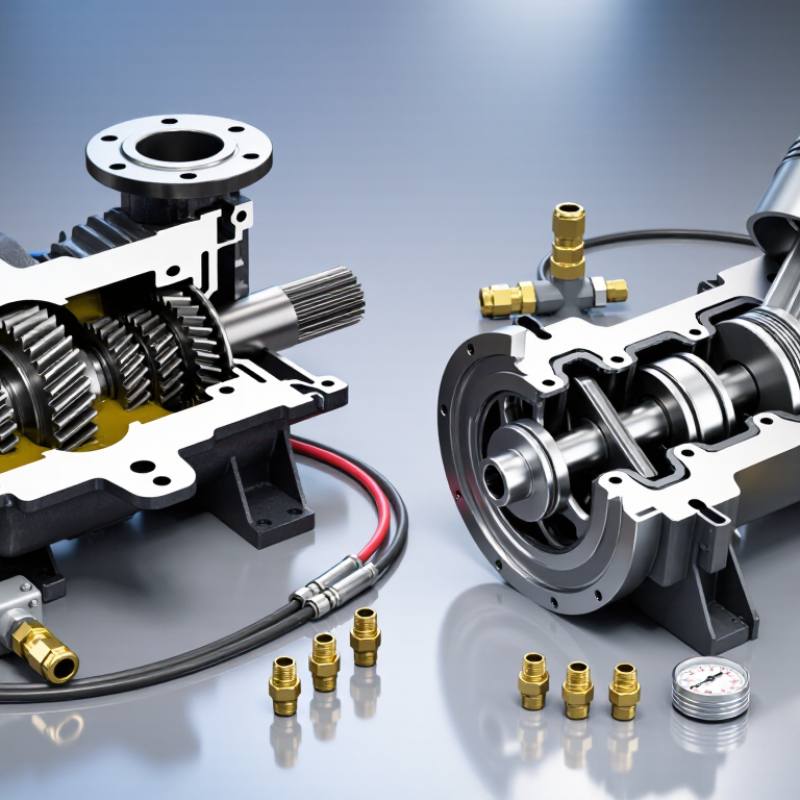
Pump Design: External Gear Mesh vs Axial-Piston Rotating Group

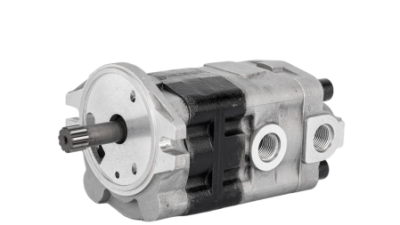
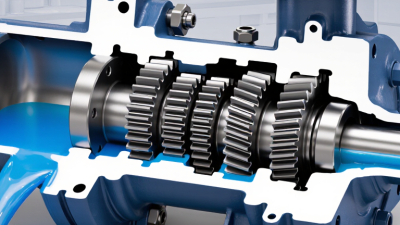
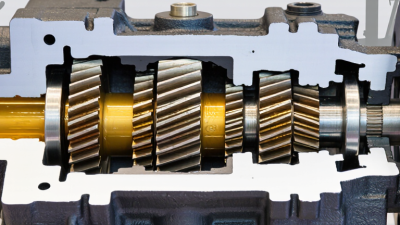
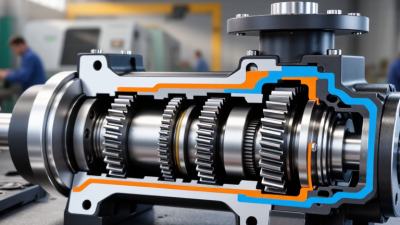
A gear pump moves oil through the changing spaces between two meshing external gears and the housing. As the gears turn, oil travels around the casing from inlet to outlet. The design is compact, direct, and usually fixed-displacement. Simple, but not crude. Clearances between gear teeth and the casing affect leakage, especially as pressure rises or components wear. Flow can also carry noticeable pulsations, which may create noise in a rigid installation.

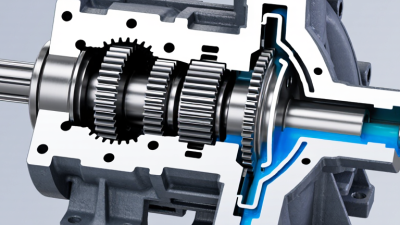
An axial-piston pump uses a rotating cylinder block with pistons sliding in and out against an angled swashplate. Changing the swashplate angle changes piston stroke, so many designs can vary displacement while running. That control is useful when a machine needs different flow rates without constantly throttling oil. It adds moving parts and tighter cleanliness demands. Small particles can mark piston bores or valve surfaces. Service work may also require more careful measurement than a basic gear-pump replacement. The comparison is not perfectly clean: operating pressure, oil temperature, filtration, and duty cycle can matter as much as pump type. In the field, a well-maintained fixed-displacement pump may outperform a poorly matched variable unit. That is easy to overlook.

Typical Pressure Ratings: Gear Pumps 160–250 bar; Piston Pumps 250–350 bar

Typical working-pressure ratings often place gear pumps at 160–250 bar and piston pumps at 250–350 bar. These are selection ranges, not universal limits or formal ISO classes. Actual ratings depend on pump design, speed, fluid viscosity, temperature, and duty cycle. A unit rated for 250 bar may not tolerate continuous operation there. Check the manufacturer’s pressure curve and operating instructions before sizing the circuit.

ISO 4409:2019 describes test methods for evaluating hydraulic pump performance, including flow and efficiency under specified conditions. It does not assign gear or piston pumps fixed pressure bands, so compare test conditions with the application. At 200 bar, a gear pump may suit a steady-duty machine with modest flow demands. For higher pressure and variable flow, a piston pump often offers more flexibility, though it can cost more and needs cleaner fluid. Small details matter. A clogged filter or hot oil can undermine an otherwise sound rating. Pumps And Equipment buyers should compare continuous and peak pressure, not just the headline figure; that distinction is easy to miss.

Volumetric Efficiency: Gear Pumps 85–95%; Piston Pumps 90–98%

Volumetric efficiency measures actual delivered flow against theoretical displacement. Common industry comparison ranges put gear pumps at 85–95% and piston pumps at 90–98%. The difference is clearest under pressure, where internal leakage can reduce output. Still, a clean number can mislead. Actual results depend on speed, oil viscosity, temperature, wear, and pressure.

Consider a pump with a theoretical flow of 20 L/min. At 85–95% efficiency, a gear pump would deliver about 17–19 L/min; at 90–98%, a piston pump would deliver about 18–19.6 L/min. These are illustrative calculations, not guaranteed ratings.

ISO 4409:2019 sets methods for testing and reporting steady-state performance of positive-displacement Pumps And Motors, helping buyers compare results under stated conditions. When assessing Pumps And Motors, check the test pressure and fluid temperature behind each figure. A few percentage points matter. But without matching test conditions, the comparison may be less useful than it looks.

Flow Control: Fixed Gear-Pump Displacement vs Variable Piston-Pump Output

A gear pump delivers nearly fixed flow per revolution, so flow rises with shaft speed.

For example, a 20 cm³/rev pump at 1,500 rpm produces about 30 L/min before leakage and losses.

If an actuator needs less, a valve can divert surplus flow, often creating heat. Simple and dependable, but not always efficient under changing demand. Real circuits are messier.

A variable-displacement piston pump changes its swash-plate angle to reduce or increase displacement while running.

Pressure-compensated designs can reduce output when a cylinder pauses, avoiding continuous full-flow bypass. The U.S. Department of Energy’s 2006 Improving Pumping System Performance sourcebook reports that pumping systems use nearly 20% of global electricity, with some industrial operations using 25–50% of their energy on pumping.

These figures cover pumping systems broadly, not hydraulic gear-versus-piston tests, so they are context—not a direct efficiency comparison.

For a machine that cycles between fast travel and brief high-pressure work, variable output can cut wasted flow. Yet controls, oil temperature, and operator settings still matter. The neat theory does not always survive the shop floor.

Operating Limits: Compare Rated Speed, Noise in dB(A), and ISO 4406 Cleanliness

China Top 10 Gear Pump vs Piston Pump Differences?

Rated speed is not a simple winner-takes-all figure. Gear pumps often suit steady, straightforward duty, while piston pumps can support higher speeds in some designs. Check each unit’s rated speed under your actual pressure, oil viscosity, and inlet conditions. A number on a datasheet may not reflect a hot machine running near its limits.

Noise needs a fair test. Compare dB(A) readings at the same speed, pressure, distance, and installation setup. Gear pumps may produce a steady whine; piston pumps can create sharper pulsation. Mounting and pipe resonance matter, too. Small details change the sound. For Hydraulic System And Components, record readings beside the machine, not from memory. ISO 4406 cleanliness codes also deserve attention: piston pumps commonly need tighter contamination control, but exact limits depend on the design and supplier.

Cost and Maintenance: Simpler Gear Pumps vs Tighter Piston-Pump Tolerances

Gear pumps usually cost less to buy and service. Their fewer precision parts make inspection more straightforward: check shaft seals, bearings, and gear wear, then measure leakage or output. A piston pump has more sliding surfaces and tighter clearances, so repairs may require cleaner assembly and closer measurement. That extra precision can raise service time and parts costs. But purchase price alone can mislead. The U.S. Department of Energy’s Improving Pumping System Performance (2006) treats energy use and maintenance as life-cycle costs, not just initial expense. In practice, duty cycle, pressure, and operator skill can outweigh the pump type.

Contamination is where the difference gets tangible. ISO 4406:2021 classifies fluid cleanliness by particle counts at three sizes; for example, cleanliness code 18 at 4 μm(c) corresponds to 1,300–2,500 particles per millilitre. Piston pumps’ close-fitting parts can make cleanliness control especially important, while gear pumps are not immune to abrasive wear. ISO 4406 is a classification standard, not a universal pump limit, so use the equipment’s specified target. That detail is easy to miss. My cautious take: simpler gear-pump maintenance is often an advantage, but only when its operating demands fit the application. A poorly matched “low-cost” pump can become the expensive choice.

Gear Pumps vs. Piston Pumps: Typical Pressure Ranges

Indicative ranges for common industrial hydraulic pump designs; actual ratings vary by model and operating conditions.

Gear pumps have a simpler construction and are often easier and less costly to service. Piston pumps use tighter clearances and typically require greater attention to cleanliness and precision during repair, but can operate at higher pressures. These are general design differences—not a direct comparison of service costs or maintenance intervals, which depend on the pump and application.

Application Selection: Match Pressure, Flow, and Duty Cycle to China’s Industries

China’s industrial scale makes hydraulic selection a practical uptime decision. The World Steel Association’s World Steel in Figures 2024 reports that China produced about 1.019 billion tonnes of crude steel in 2023. Steelmaking and cement handling use presses, conveyors, and mobile equipment, each with different pressure and flow demands.

Gear pumps suit steady-flow circuits, such as basic lubrication or conveyor drives, where ruggedness and straightforward maintenance matter. Piston pumps are often a better fit for higher pressure or variable flow, including press systems that need power on demand. Check the machine’s peak pressure, required flow at operating speed, and daily duty cycle—not just its headline rating. A pump that runs continuously near its limit can overheat oil and shorten component life. The trade-off is real: piston units offer control, but usually need cleaner oil and more careful setup.

Tips: Record pressure and flow during a full work cycle, including starts and load peaks. Compare those readings with the pump curve and oil-temperature limits. ISO 4409 provides standardized test methods for hydraulic pump performance. One common oversight is sizing for peak pressure alone; flow demand and heat matter too. Pumps And Power decisions should reflect actual site conditions, not a catalog example.

China Top 10 Gear Pump vs Piston Pump Differences? - Application Selection: Match Pressure, Flow, and Duty Cycle to China’s Industries

Comparison Dimension Gear Pump Piston Pump Application Selection in China’s Industries
1. Operating pressure Common external gear pump designs are used at moderate to high pressures. The allowable continuous pressure depends on design, speed, temperature, and service life. Axial and radial piston designs are commonly selected for higher-pressure hydraulic systems. Maximum and continuous ratings vary by model and operating conditions. For high-force construction machinery, hydraulic presses, and some metallurgical equipment, consider a piston pump when the required continuous pressure exceeds the selected gear pump’s rating. Check the manufacturer’s pressure curve rather than relying on pump type alone.
2. Flow control Most gear pumps are fixed-displacement: flow is approximately proportional to shaft speed, with some variation from leakage and operating conditions. Available as fixed- or variable-displacement designs. Variable-displacement models can adjust output to demand, depending on their control system. Choose a gear pump for systems with steady flow demand, such as simple lubrication or auxiliary circuits. Consider a variable-displacement piston pump for machine tools or injection-molding systems with changing flow requirements.
3. Efficiency and heat Often offers a practical, economical solution for moderate-pressure duties. Efficiency can fall as pressure rises because of internal leakage and friction. Can provide high overall efficiency in properly sized, well-maintained systems, particularly where pressure and flow vary. Actual performance depends on control settings and operating point. For long operating hours in energy-intensive production, compare measured input power and system losses at the actual duty points. A piston pump is not automatically more efficient in every application.
4. Duty cycle Well suited to intermittent and many continuous-duty applications when the pump is correctly rated, lubricated, and cooled. Also suitable for continuous service when specified for it, but variable controls, pressure levels, and maintenance conditions affect durability. For mining, steel production, and factory equipment running multiple shifts, size either pump for continuous pressure, temperature, and speed—not only peak demand—and follow the specified service intervals.
5. Flow smoothness and noise Tooth engagement produces flow pulsation. Noise depends on pump design, speed, pressure, mounting, and the hydraulic circuit. Flow pulsation varies with piston count and design. Noise also depends on speed, control strategy, installation, and system resonance. For indoor machine tools or equipment near operators, assess noise and pressure ripple on the complete system. Use suitable mounting, piping, and damping where required.
6. Fluid viscosity and temperature Often tolerates a broader viscosity range than a precision piston pump, within the pump’s specified limits. Cold, highly viscous fluid can increase starting torque and pressure losses. Requires viscosity to remain within its specified operating range for lubrication, control response, and component life. Excessively thin or thick fluid can cause problems. For agricultural machinery, outdoor construction equipment, or systems exposed to seasonal temperature changes, select the fluid grade and startup procedure for the expected temperature range.
7. Contamination sensitivity Requires clean hydraulic fluid; abrasive particles accelerate wear and increase internal leakage. Filtration requirements depend on the design and operating conditions. Precision components and control surfaces can be particularly sensitive to contamination. The required cleanliness level must follow the pump and system specifications. For steel mills, ports, mining sites, and other dusty or wet environments, prioritize effective filtration, reservoir cleanliness, and contamination control regardless of pump type.
8. System complexity Typically has a straightforward construction and simple flow relationship, which can make circuit design and troubleshooting comparatively direct. Variable-displacement models may require pressure, load-sensing, or other control arrangements, adding setup and diagnostic considerations. For basic hydraulic power units and auxiliary circuits, a gear pump can simplify the system. Where the machine needs demand-based flow or sophisticated control, a piston-pump system may be appropriate.
9. Initial cost and maintenance Often has a lower initial cost and straightforward replacement options, although service life depends on pressure, fluid cleanliness, and operating conditions. Can involve higher purchase and servicing costs, particularly for variable-displacement units. Repair may require suitable expertise and clean working conditions. For cost-sensitive agricultural equipment or general industrial auxiliaries, compare lifecycle cost, local service capability, spare-parts availability, and downtime—not purchase price alone.
10. Typical application fit Commonly used in lubrication, transfer, and hydraulic circuits requiring relatively steady flow and a suitable pressure rating. Commonly used where higher pressure, adjustable flow, or efficient operation across varying demand is important. Gear pumps may suit lubrication skids, agricultural equipment, and auxiliary circuits. Piston pumps may suit construction machinery, injection-molding machines, hydraulic presses, and other demanding variable-load systems. Verify each machine’s actual pressure, flow, speed, and duty cycle.

Selection note: Pressure and flow capabilities differ by model and are affected by speed, fluid, temperature, installation, and duty cycle. Confirm continuous and peak ratings, filtration requirements, and operating limits in the pump’s technical documentation.

Excavator Oil Pump Trends: Insights from Mordor Intelligence’s Global Excavator Market Report, Featuring CBXWL35 Series

Mordor Intelligence’s Global Excavator Market Report estimates that the market will grow from about USD 49.18 billion in 2024 to USD 65.65 billion by 2029, reflecting sustained demand for construction and infrastructure equipment. This expansion puts greater emphasis on hydraulic components that can deliver dependable flow and pressure under varied operating conditions. The CBXWL35 series is configured with front and rear pump pressure grades of 20/10 MPa or 25/13 MPa, offering two pressure combinations for different excavator hydraulic requirements.

The series has a nominal displacement of 38 mL/r for the front pump and 8 mL/r for the rear pump. Its shaft end uses an SAE spline, while the listed mounting dimensions are Φ90 and Φ82. Rotation is specified as left, or counterclockwise; a right-hand rotation option is not stated. These details give equipment designers and maintenance teams a practical basis for checking pump compatibility against the machine’s hydraulic circuit, mounting arrangement, and required operating direction as the excavator market continues to expand.

FAQS

What pressure range is typical for gear pumps?

Gear pumps commonly operate within 160–250 bar. Actual limits depend on design, speed, fluid, temperature, and duty cycle.

What pressure range is typical for piston pumps?

Piston pumps commonly fall within 250–350 bar. These are selection ranges, not universal limits.

Does a 250-bar rating mean continuous operation is safe?

Not necessarily. Check the pump’s pressure curve and operating instructions before sizing the circuit.

When might a gear pump be suitable?

It can suit steady-flow tasks, such as lubrication or conveyor drives. Simple maintenance may be an advantage.

When might a piston pump be a better fit?

It often suits higher pressure or variable flow, such as a press needing power on demand. It may cost more.

What should be checked besides peak pressure?

Check required flow, operating speed, and daily duty cycle. Peak pressure alone misses important demands.

How can heat and contamination affect pump performance?

Hot oil or a clogged filter can undermine a pump’s rating. Cleaner fluid is especially important for piston pumps.

How can operators choose a pump for a real machine?

Record pressure and flow through a full work cycle, including starts and load peaks. Compare readings with pump curves and oil-temperature limits. Easy to miss.

Conclusion

What Is The Difference Between Gear Pump And Piston Pump? A gear pump moves fluid through the meshing of external gears, while a piston pump uses an axial-piston rotating group. Typical pressure ratings are about 160–250 bar for gear pumps and 250–350 bar for piston pumps, though actual limits depend on the pump design. Gear pumps commonly provide 85–95% volumetric efficiency and a fixed displacement, making their flow straightforward and consistent. Piston pumps can reach roughly 90–98% efficiency and often offer variable output to match changing system demands.

Selection also depends on rated speed, noise levels in dB(A), and fluid cleanliness according to ISO 4406. Gear pumps generally have simpler construction, lower initial cost, and easier maintenance, while piston pumps use tighter tolerances and require careful attention to cleanliness. For China’s industrial, construction, agricultural, and manufacturing applications, compare required pressure, flow, duty cycle, operating conditions, and maintenance capacity to choose the suitable pump type.

Isabella

Isabella

Isabella is a dedicated marketing professional with extensive expertise in the hydraulic components industry. With a strong foundation in research, development, and distribution, she plays a crucial role in showcasing the innovations and solutions offered by her company, which specializes in gear......
Previous Top Durable Gear Pumps for Industrial Use?